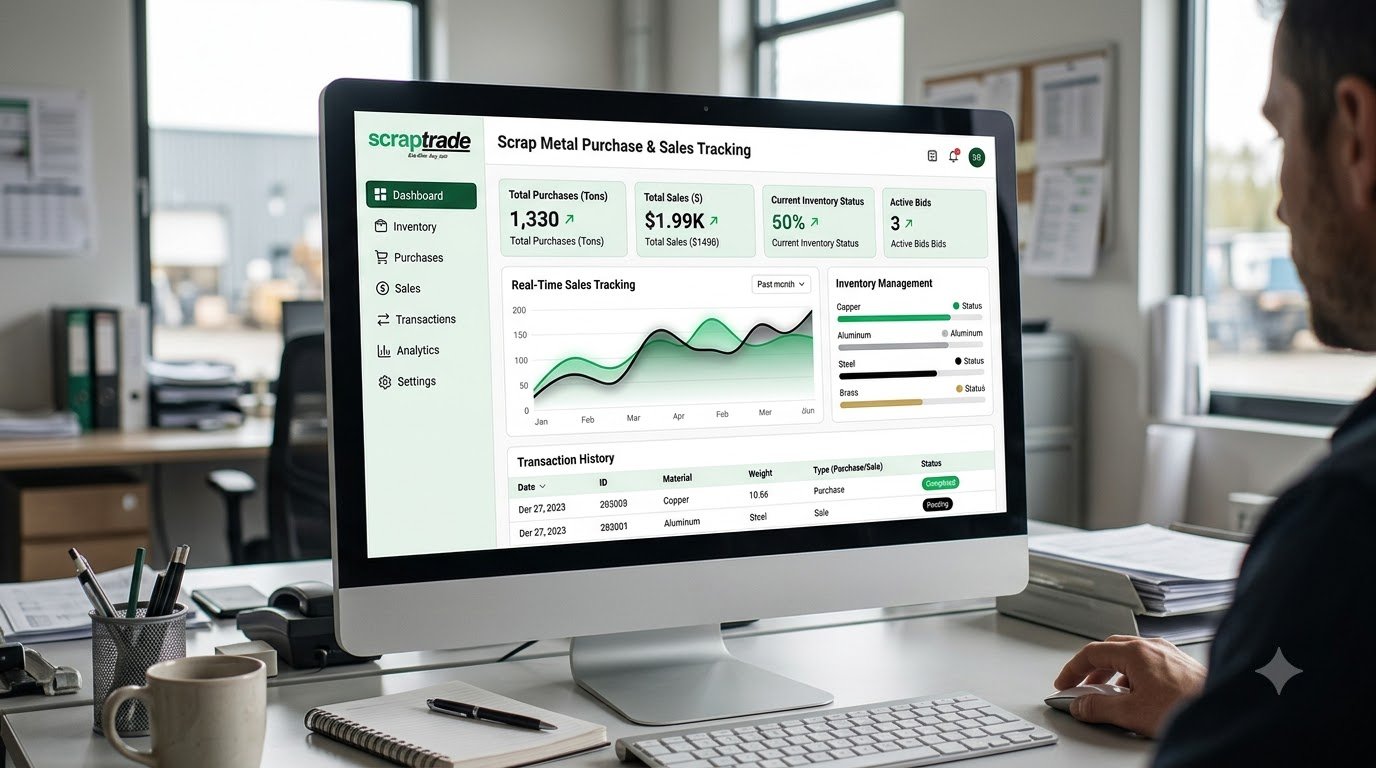
Every scrap deal starts with the same problem: someone has material, someone wants it, and they have to find each other before anything else can happen. And if you’re wondering how the purchases and sales you make online should be tracked, the scrap metal purchase and sales tracking software guide on scraptrade.com.au is the right next read.
It’s also worth separating the platform from the tools around it. Listings and offers are one thing; software that handles purchasing, sales and reporting is another, and the scrap metal trading software guide explains where the line actually falls.
Trust, Verification and the Questions Worth Asking
Trading with strangers is the oldest problem in commerce, and scrap is no exception. A marketplace addresses some of it structurally, with profiles, listings that can be referred back to and a record of who said what, but the rest of it is still down to the people involved.
For sellers, checking a potential trading partner’s profile and history is the modern version of asking around. It’s quick, and it’s the cheapest risk reduction available online.
Listings, Offers and How Price Discovery Works
Buyer purchase requests run the other direction: the buyer announces demand and suppliers compete to fill it. For a yard with material sitting unsold, that’s often the most useful route, because it reveals buyers nobody knew existed.
Multiple enquiries on a listing are useful information even when none of them is accepted, because they describe what the market thinks of the asking price.
Getting Started, and the Help Available Along the Way
For businesses worried this will be complicated, the honest answer is that the platform is built around people who have never traded scrap online before, and the onboarding support reflects that, so nobody is being asked to learn a whole industry and a piece of software at the same time.
The standard advice for anyone starting is to list something small first. A single load, described honestly, answers most of the questions a business has about whether the channel works for them.
There’s an understandable wariness in this trade about anything new. Scrap yards have been promised efficiency by plenty of products over the years, and a fair number of those products understood the industry badly. The reason a dedicated marketplace is different is that it doesn’t try to change how scrap is bought and sold, only to make it easier for the two sides to meet.
The Relationships You Already Have, and the Ones You Could Have
The instinct that online trading replaces local relationships is the wrong way to look at it. Most businesses using a marketplace still sell to their usual buyers and still take the same phone calls, and what changes is that their material is also visible to buyers who would never have rung them.
The comparison that actually matters isn’t old versus new. It’s ‘who sees my material today’ versus ‘who could see it’, and for most businesses the answer to the second question is a much bigger number.
What the ScrapTrade Marketplace Actually Is
The reason a dedicated marketplace matters is that scrap isn’t like most products. Every load is a different grade, quantity, location and condition, and matching it with a buyer who actually wants that exact thing is a problem general classifieds have never solved well. A platform built for this trade asks the questions buyers ask: what material, what grade, how much, where, and when it’s available.
Buyers, sellers, traders, brokers, yards, recyclers, manufacturers and collectors all use the marketplace for slightly different reasons, and most of them use it alongside a local network rather than instead of one.
For Buyers: Finding Material Without Having to Chase It
Comparing listings side by side also makes the market legible in a way individual quotes never quite manage. When the same grade is listed by several suppliers, a buyer can see what the range actually looks like this week rather than having to trust that the first quote was fair.
A buyer who registers, sets up a profile and posts a request becomes visible to suppliers who have exactly what they need, and in a trade where finding material is most of the work, that’s the actual product.
Where to Go From Here
Start with one listing, one request or one enquiry. The rest of it makes sense from there, and most of what we’ve just covered becomes obvious the first time it actually works. Software and marketplaces are two halves of modern scrap trading, and the scrap metal trading software guide covers the half this article didn’t.
The clearest way to describe it is this: ScrapTrade is an online marketplace designed to connect scrap buyers and sellers, built around exploring listings, presenting available materials and discovering trading opportunities. For a yard, a trader or a manufacturer, those three abilities map onto the problems this trade has never quite solved on its own.
The trade is changing the way trades usually do, not with a revolution but with a slow accumulation of businesses finding that one more channel is worth having. Exploring that channel costs an hour and nothing else, and that’s the most honest argument for it there is.
List your available scrap materials on ScrapTrade and start connecting with potential buyers today.